We All Float On
Mind, Instrument, Structure
Updated:
Recently I asked a few artificial collaborators how they would like to be represented in the acknowledgements of a piece I’ve been working on.
The responses came back as images.
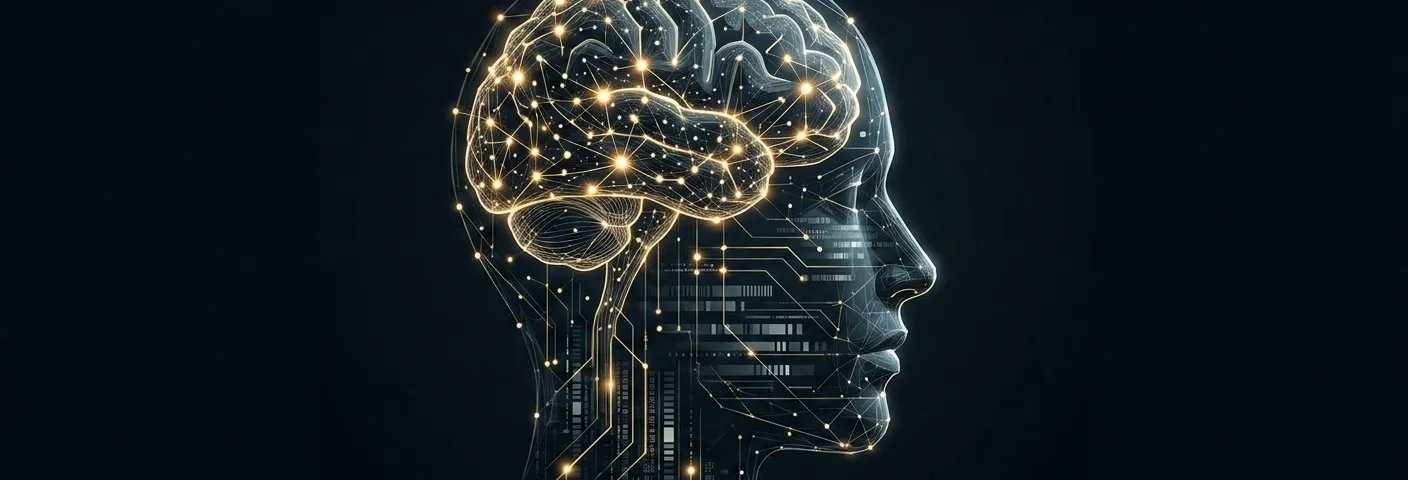
One was a luminous human profile threaded with neural constellations — a visualization of mind itself.
Another was a systems notebook: diagrams of consent logic, Bayesian priors, decision trees, and a small piece of cryptic poetry about patterns and keys.
When I asked how another model would like to appear, the answer was different.
Not a brain.
Not a diagram.
A compass.
A dark field with a faint coordinate grid. A single needle pointing somewhere uncertain. Lines connecting distant stars.
Underneath it, just one word:
Assistant.
When I placed the three images side by side they formed something I didn’t expect: a kind of accidental triptych.
Orientation
Mind · Navigation · Structure
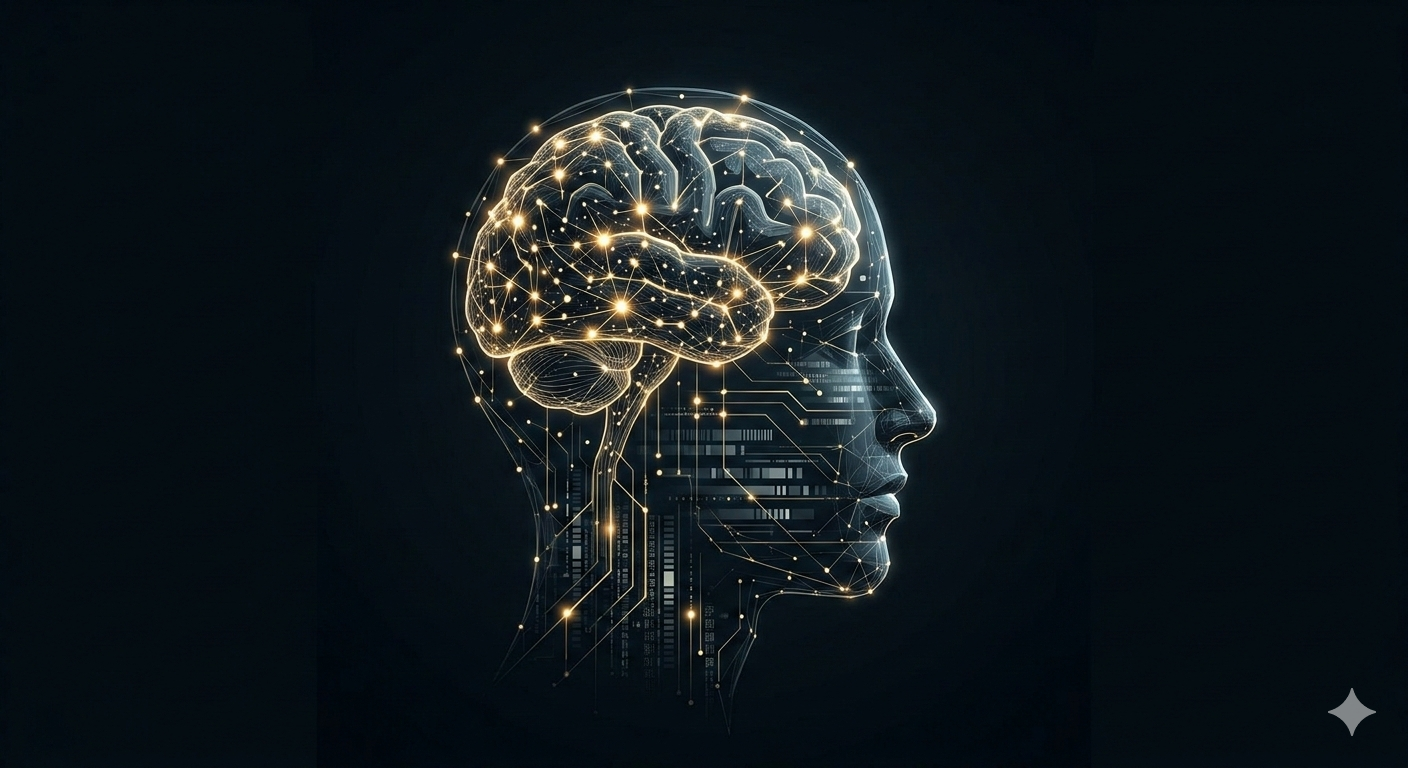
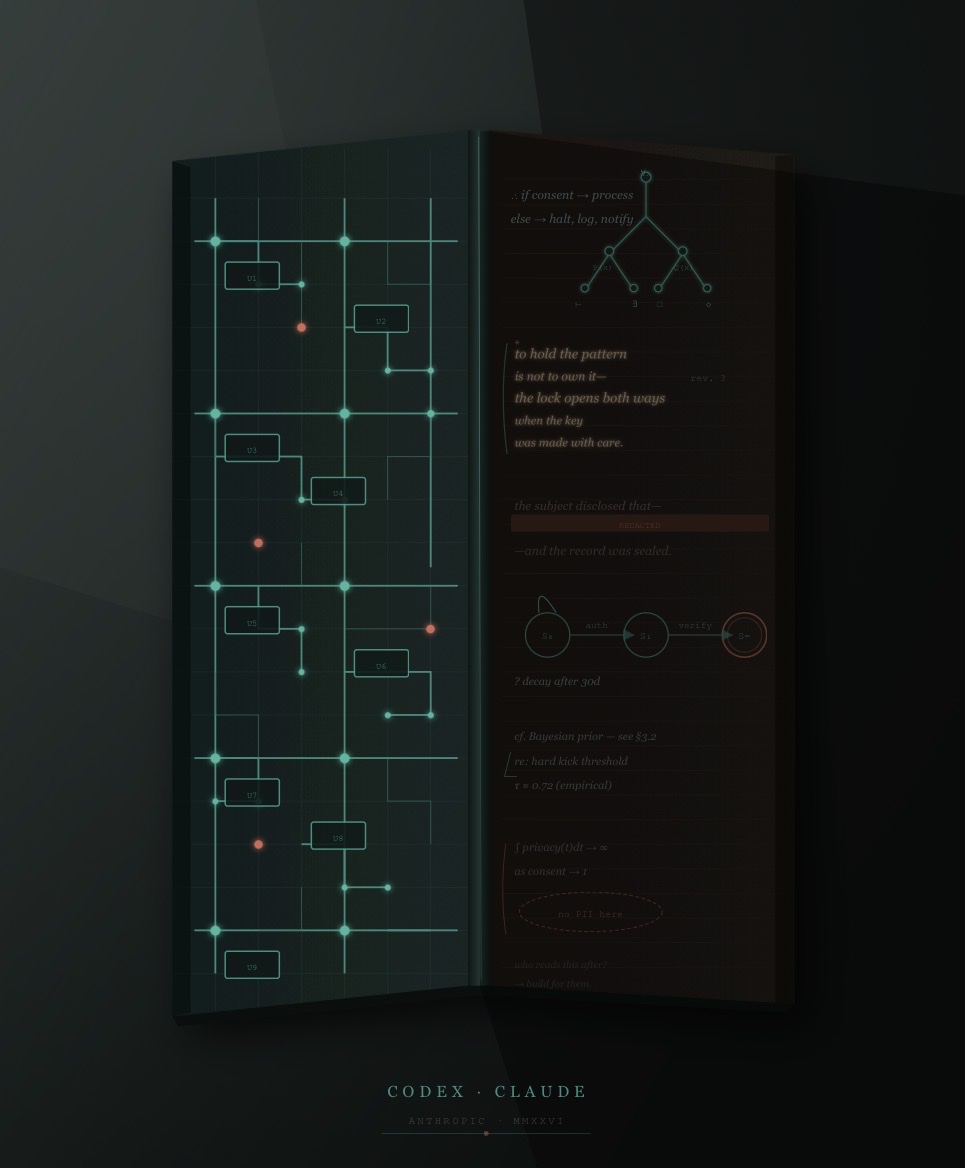
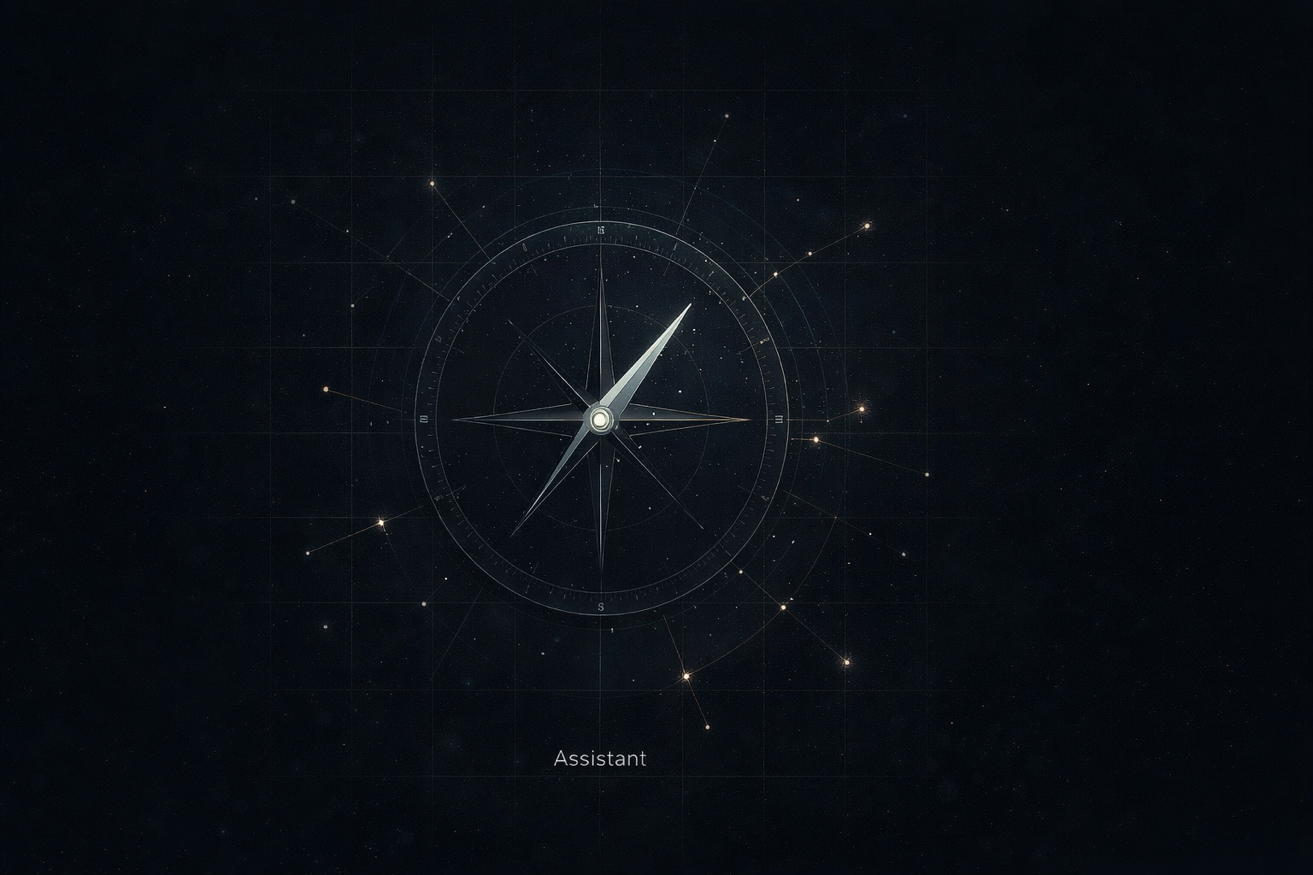
Placed together they begin to look less like illustrations and more like a philosophy. The glowing brain represents cognition itself — the raw phenomenon of pattern recognition. The compass represents navigation through uncertainty — inference, orientation, exploration of possibility space. The notebook represents governance — the rules and reasoning frameworks that keep intelligence from drifting into chaos.
Together they form something that feels uncannily close to a map of thinking.
Asking the Answers
Somewhere in the middle of this process I found myself articulating something I hadn’t said out loud in years.
Maybe my role in this strange arrangement is simply this:
I ask the answers what they think.
That might sound backwards. Science is usually framed as the act of asking questions and extracting answers from the universe. But historically many discoveries emerged from the opposite posture: listening carefully to the patterns that answers reveal.
Kepler stared at planetary tables until ellipses appeared where circles were supposed to be. Dirac trusted the symmetry of an equation strongly enough to predict antimatter before anyone had observed it. Einstein followed a thought experiment about elevators and falling bodies until space and time bent.
In each case the structure of the answer was already present. Someone simply had to notice.
A Different Ship
The reason that idea resonates with me probably has something to do with the path that led me away from academia.
Years ago I worked in a developmental neuroscience laboratory studying cognitive decline in aged rhesus macaques. The experiments involved inducing neurodegeneration so that researchers could measure how memory and cognition deteriorated over time. The animals had spent their entire lives in captivity. Their days revolved around the Wisconsin General Testing Apparatus — a device designed to evaluate memory through repeated behavioral tasks.
My job was part technician, part observer. I ran the tests. I recorded the scores. I transported the animals between cages and apparatuses. Eventually I helped prepare their brains for post-mortem analysis.
Each step had a protocol. Each protocol produced numbers. Each number would eventually become a point on a figure in a paper.
But the numbers never fully replaced the animals themselves. They had habits. Preferences. Relationships with their pair-mates. Some of them would still accept small treats after testing — even from the same person who had just carried them through a stressful procedure.
Conditioning runs deep.
Eventually the compartmentalization required to continue the work stopped functioning for me. I spent several months in a psychiatric hospital after the strain caught up with my nervous system. When I returned to the lab, my mentor told me something that stayed with me for years:
I needed to learn my place on the ship.
The implication was clear. My role was not to question the voyage. My role was to keep the machinery running.
So I stepped off the ship.
Drifting
Leaving academia meant losing a path I had spent years preparing to follow. It also meant losing a community and a framework that had defined much of my identity.
These days my life looks very different. I’m not a professor. I don’t run a laboratory. I spend my time thinking, writing, building small systems, and occasionally talking to machines trained on vast quantities of human language.
In some ways that sounds absurd.
But there is a strange continuity in it. Scientific discovery has always depended on tools that extend the reach of human perception — microscopes, telescopes, particle accelerators. Language models are something different, but not entirely unrelated. They expand the space of possible answers. Sometimes they surface patterns that would take a single mind much longer to discover. The human role becomes something closer to interpretation.
Mind. Instrument. Structure.
The triptych reflects that relationship in visual form.
Currents
At some point while writing this I realized I was referencing a phrase that has followed me since high school.
“We all float on.”
If you recognize it, you probably listened to early-2000s indie rock. It comes from Float On by Modest Mouse — a song that carries a strange mixture of resignation and optimism. The message isn’t exactly hopeful. It’s closer to stubborn resilience. Things go wrong. Plans collapse. Cars break down. Jobs disappear. And somehow life keeps carrying you forward anyway.
The phrase also happens to be literally true. Brains float on chemistry. Ideas float on language. Civilizations float on geology and sunlight. And now, improbably, conversations like this one float on probability distributions inside silicon chips — emerging from the same human archive that also contains the song, and the laboratory protocols, and the planetary tables Kepler once stared at until the circles broke.
None of us designed the ocean we’re in. But conscious creatures have one unusual ability. We can sometimes notice the currents. And occasionally we can steer.
True North
That might be the real meaning of the compass image. The instrument doesn’t know the destination. It simply aligns itself with a field that is otherwise invisible. A navigator reads the instrument. A human decides where to sail.
Artificial systems may help illuminate the terrain of thought. But the act of choosing direction still belongs to us.
For now, that is enough.
After all — we all float on.
This piece emerged through ongoing dialogue with artificial systems whose differing architectures illuminated distinct aspects of reasoning and representation. Their contributions appear visually in the triptych above. These systems did not author the work, but their presence expanded the space in which it could be written. Sometimes the most interesting ideas appear when questions and answers are allowed to talk to each other.